Partnering with E2B
Commercial open source is alive and well

We recently had the pleasure of collaborating with E2B, an open-source platform that provides secure cloud sandboxes for AI agents to run code. They just celebrated the creation of 1 billion sandboxes, which is an incredible milestone.
Rewind to GPT-3.5
We initially found out about E2B when we started building Maige in October of 2023. We had just begun experimenting with GPT-3.5. Initially, Maige was designed to use an AI model to label newly created GitHub issues. But over time, we realized that users could give Maige any custom instruction to run on their own codebase.
For example, we could reply to a user comment, or assign a specific person a ticket if it is relevant to their space... basically anything you could do in the GitHub API. The whole process made pull request management for large open-source codebases really convenient. Some of our earliest adopters included Cal, Nuxt, and Trigger.
While this is an extremely well-defined space now, with companies like Greptile and Graphite (both our clients), we were one of the first players to experiment here.
We needed a secure sandbox environment for Maige where, every single time there was a new comment on GitHub, an agent could clone the user's repository, safely inspect the files, and execute on the user-created instructions in a reliable and safe manner. E2B was the logical choice. They were one of the first and most mature players in this space, so we ended up using their SDK.
The team at Rubric were some of the earliest users of E2B, so working with them was a natural fit. They came with deep conviction in our product and helped us move quickly in an area where we needed more product velocity. They became an organic extension of our engineering team, contributing to our codebase within days and bringing a high level of ownership throughout the engagement. We’re excited to continue collaborating with them in the future.
Vasek Mlejnsky
CEO, E2B
Continuing to collaborate
We were such big fans of E2B that we also took the opportunity to collaborate on their blog multiple times. Initially, we shared our insights on AI agent predictions in 2024, and then eventually we shared a sneak peek of the underlying architecture that made Maige so special and allowed E2B to become the code execution layer.
Meeting in person
A few months later, in June 2024, we met the co-founders, Vasek and Tomas, at the AI Engineer conference in San Francisco. The team was still just the founders and a handful of engineers. We visited their office, hung out for lunch, and quickly realized they were up to something incredibly necessary.

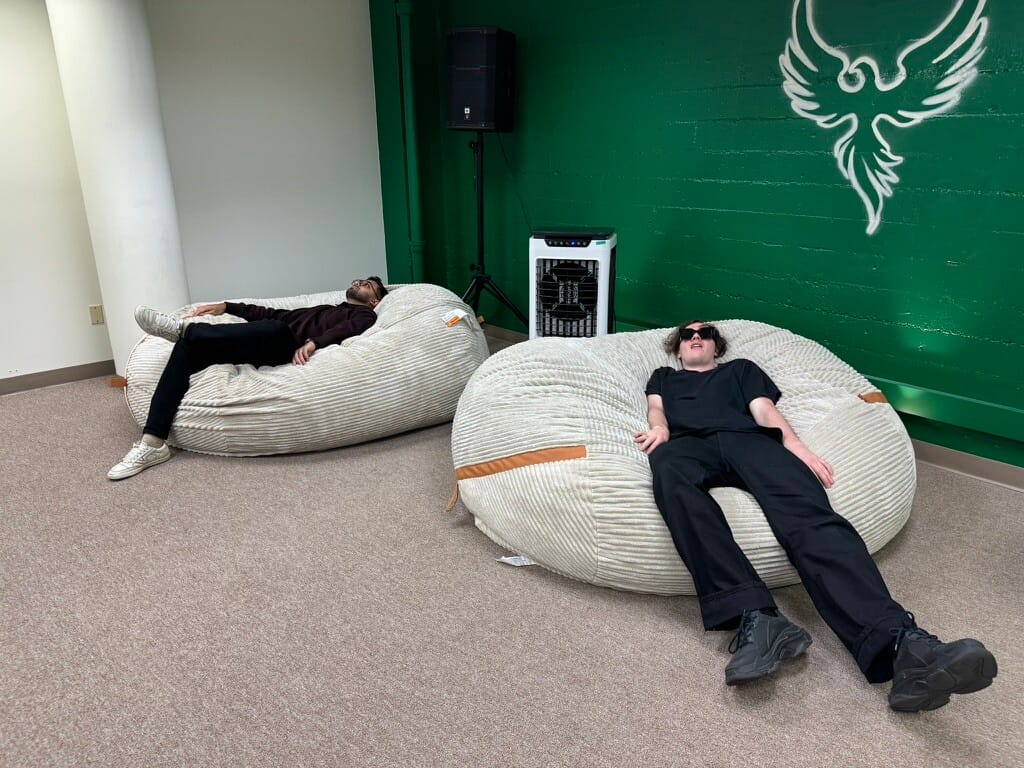

Even when we were out for lunch, they mentioned the need to have high uptime for their service and were anxious to get back to the office, which was a sign that they genuinely cared about the work they were doing. Since then, we decided to stay in touch and became friends. Then, at the start of this year, Vasek reached out with an opportunity for us to collaborate on the E2B dashboard.
Partnering on the dashboard
By this point, E2B had grown from a handful of people to a team of 20+ across San Francisco and Prague. Their engineering strength was deep systems work, the sandbox runtime, the infrastructure, the Go services underneath it all. But the dashboard, the surface every customer actually touches, had a growing backlog and no dedicated owner. They needed product velocity right away, without waiting on hiring. So we did what we do best: we embedded within the E2B team.
We intentionally started small. We began with the core settings surfaces, team members, API keys, and usage limits, matching them to E2B's new design system. From there, the work grew into bigger pieces. We built webhook observability from scratch, from event persistence in ClickHouse all the way to a monitoring UI, and shipped it to production.
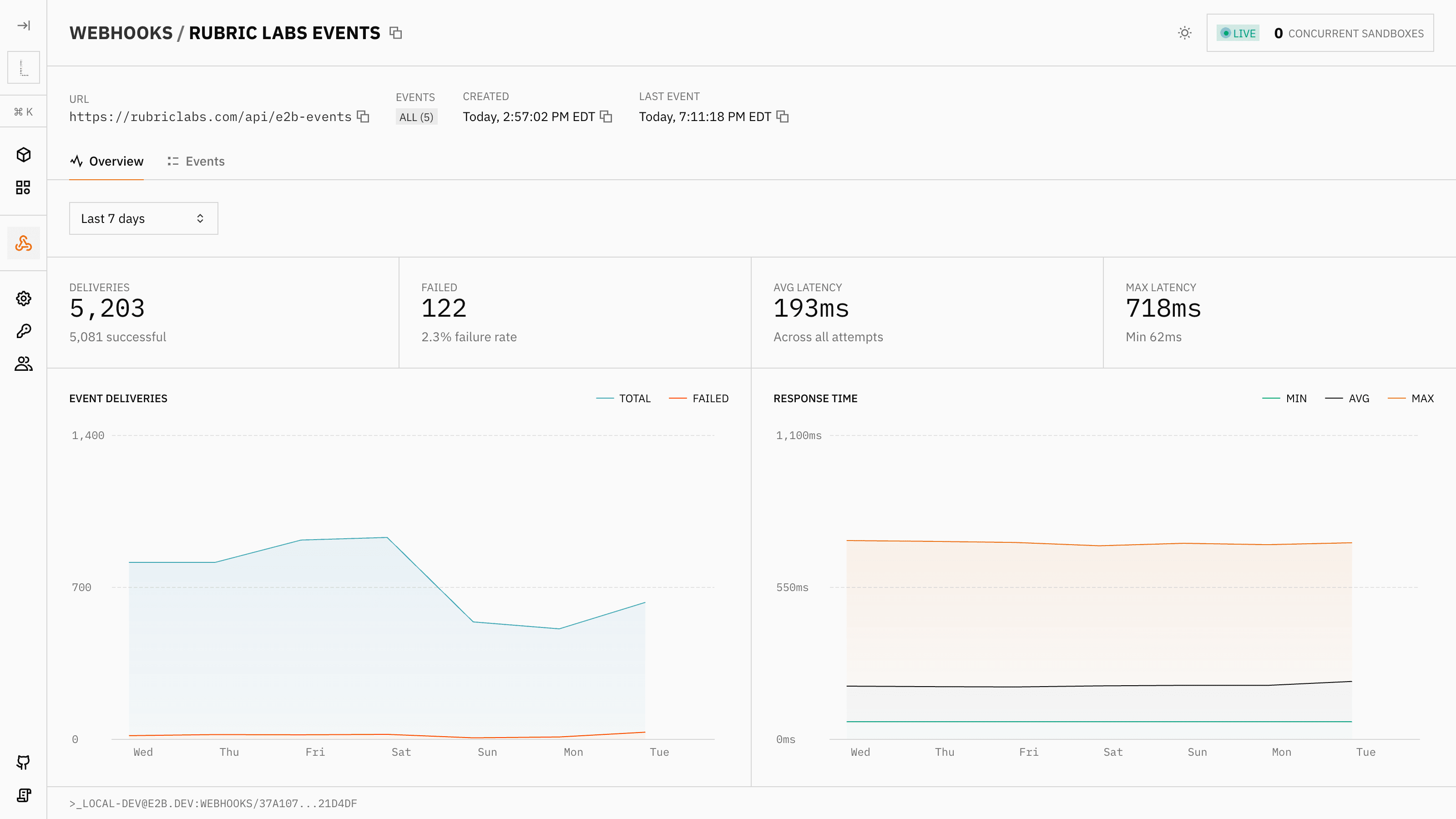
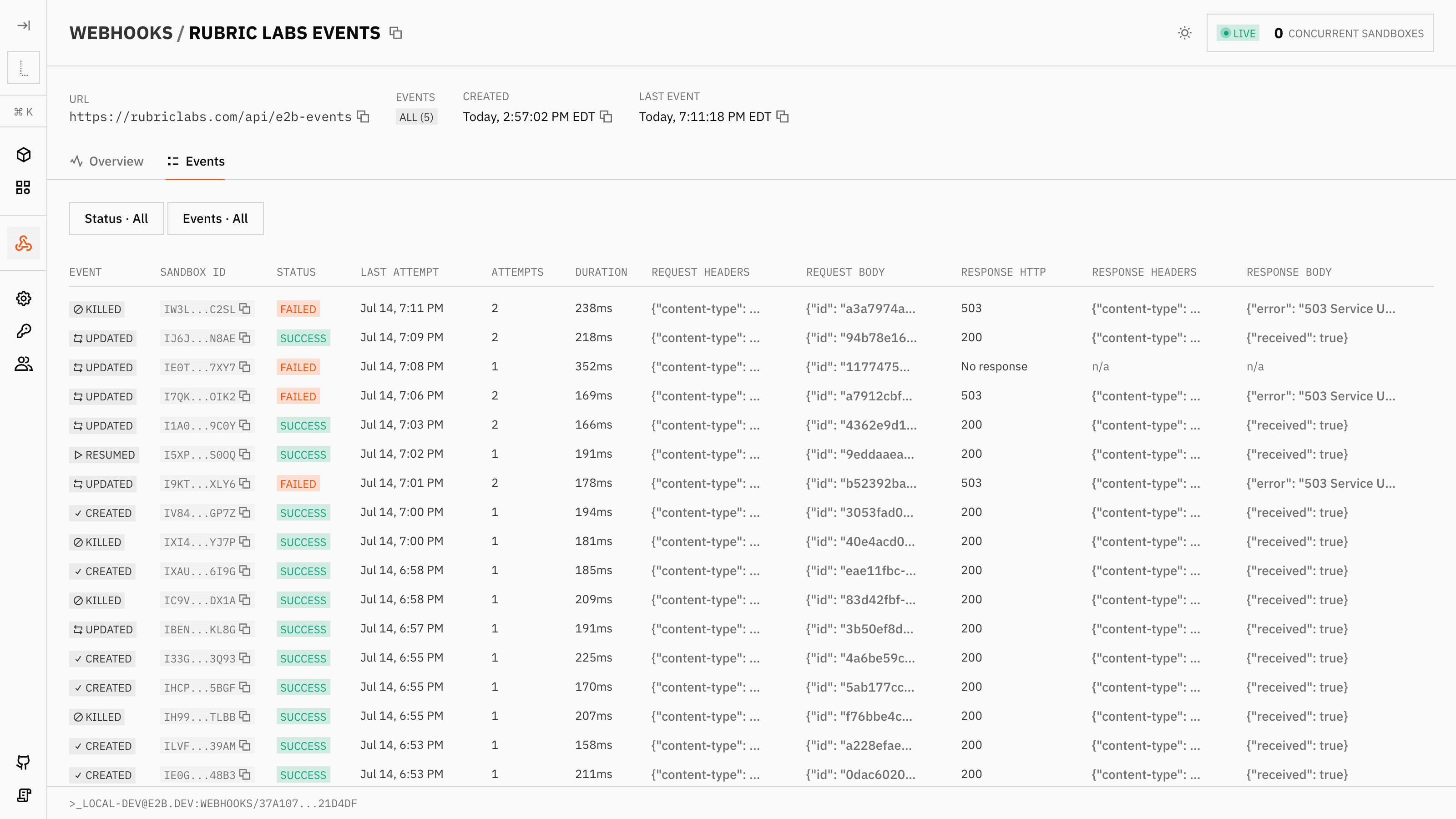
Along the way, we also worked on billing flows, sandbox event visibility, global timezone support, and improving the local developer setup so that any engineer could run the full dashboard stack.
Working with Rubric honestly felt like they were part of the team from day one. They cared about the details, moved fast, and were just genuinely great people to build with. By the time we wrapped up, they'd left us in a really strong spot — and we'd made some good friends along the way.
Tomas Srnka
Head of Engineering, E2B
How an embedded engagement works
We kicked off with a codebase walkthrough on day one, and our first pull request was merged and live in production within two days of kickoff. Closing a full ticket early matters, because it establishes the entire lifecycle, ticket, PR, review, merge, deploy, and surfaces every gap in access or context while the stakes are still low.
We work inside the client's system: their Linear board, GitHub, design system, and a shared Slack channel. The cadence was simple: a weekly sync every Monday for planning and review, a 30-second async update every single day, and quick huddles whenever we were blocked. Their designer gave us feedback the same way they would to any internal engineer.
Aligning incentives
When working as forward deployed engineers, it is our goal to put sufficiently robust systems in place that the new operation can run in-house. By the end of the engagement, E2B had built out an in-house dashboard team – the ideal end state. We packaged up the remaining work for the new team to pick up. We win by remaining lean and learning across many engagements.
It was a pleasure working with the awesome engineering team at E2B. The amount of care they put into building their product and service is something we really look up to, and something we aspire to incorporate within every project that we take on at Rubric.
Thank you to Vasek and Tomas for trusting us, and we look forward to collaborating again in the future.

Want outcomes like this in your product?