Shoppers tell the assistant what they need, and it fills the cart. It can restock the week’s staples, plan meals, turn a typed or photographed list into products, find recipes for what’s already in the fridge, and shop a recipe from a link.
One question first
We started with one question: could a language model plan a week of meals and turn it into a grocery order? We built the first version with Albertsons’ team to find out.
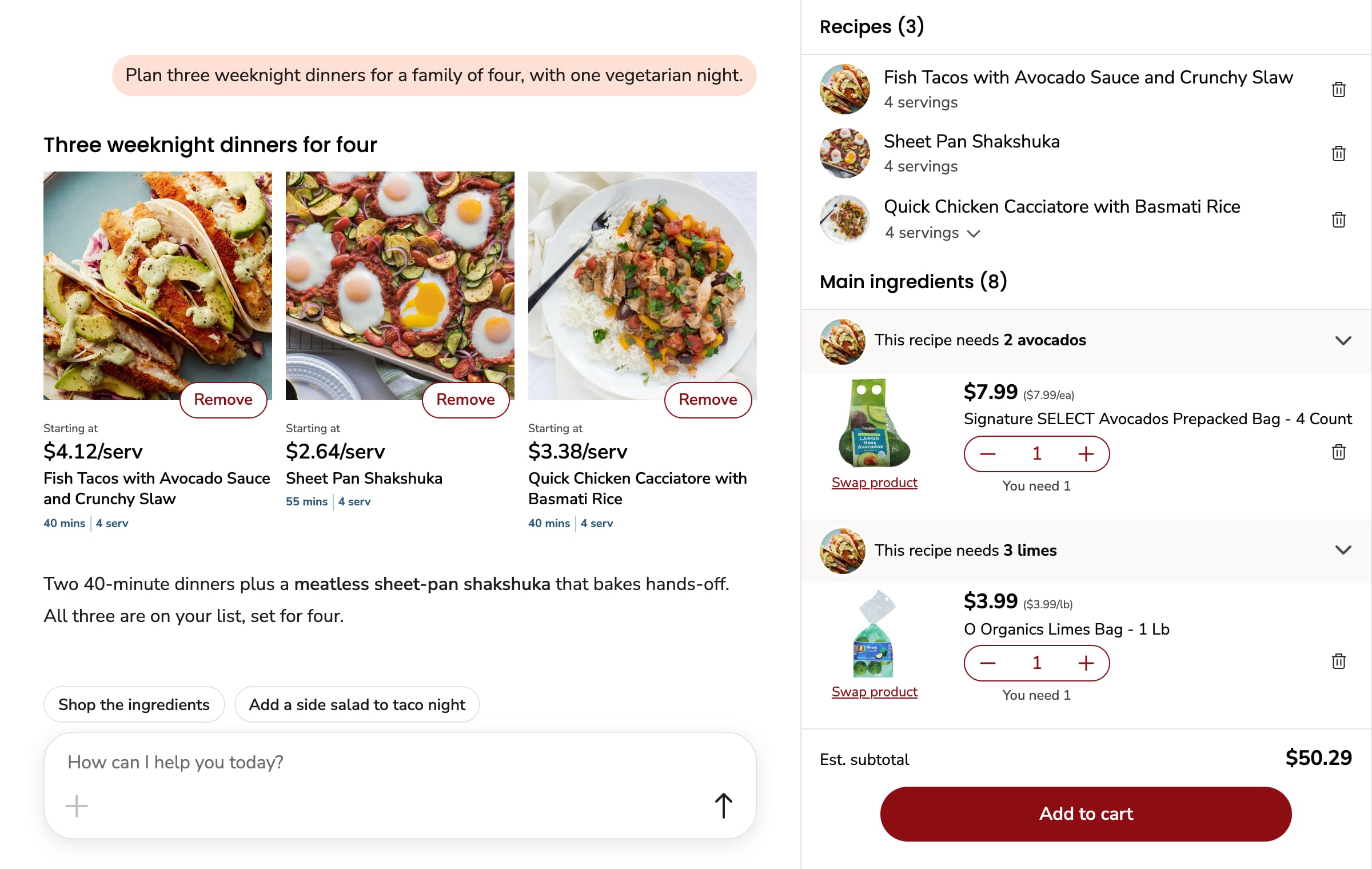
It could, and that became the core of the product. Ask for a week of dinners, and the assistant replies with recipes priced per serving. Each recipe it adds brings its ingredients into the cart as products from the shopper’s store.
A list, matched to the shelf
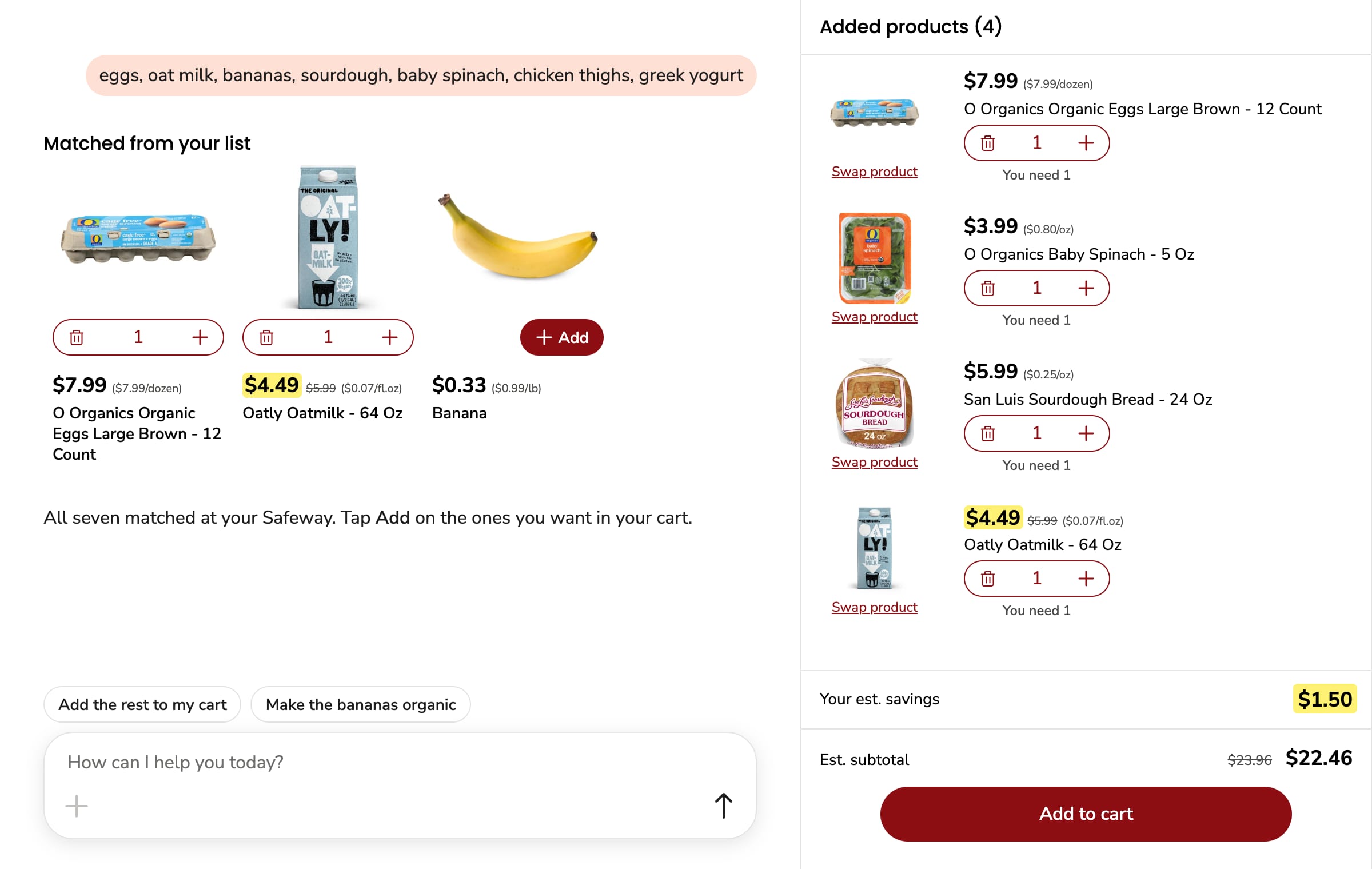
A typed list works the same way. The assistant matches each item to a product at the shopper’s store, with its size and price, ready to add.
Built for a grocer this size
Then we worked on what it takes to run that on every Albertsons Companies grocery website:
- Search that understands what people mean, like “low-calorie breakfast”, and not only product names
- Memory of a household’s preferences, from one week to the next
- Testing and tracing, so the team can see how the assistant behaves and keep improving it
Handed off
We worked in Albertsons’ codebase alongside its engineers, then handed over the systems and documentation, and its team now runs the assistant on its own. The launch announcement has more on what it does.